




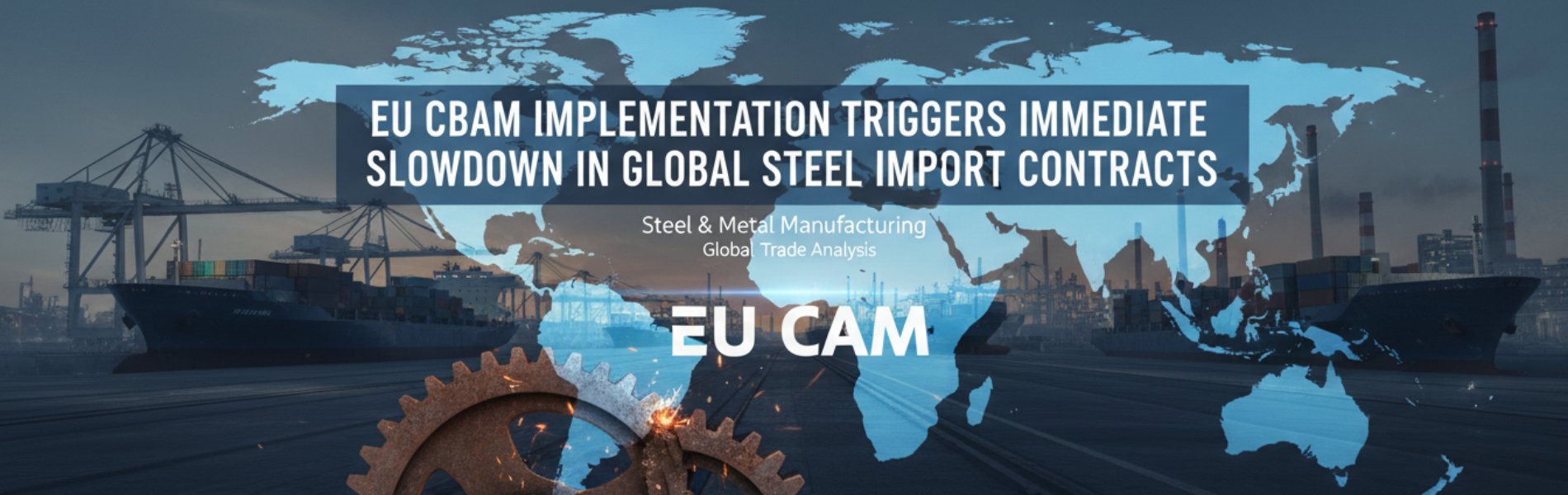
EU CBAM Implementation Triggers Immediate Slowdown in Global Steel Import Contracts
The global trade landscape is undergoing a seismic shift as the European Union initiates the transitional phase of its Carbon Border Adjustment Mechanism (CBAM). As of October 2023, the mechanism—designed to combat carbon leakage—has forced international traders and steel manufacturers into a period of uncertainty. At SaudiSteelWork, we are closely monitoring how this regulatory overhaul is precipitating an immediate slowdown in global steel import contracts, specifically affecting long-term booking volumes and spot market liquidity.
The Immediate Market Reaction: A Wait-and-See Approach
The introduction of the CBAM transitional phase has resulted in a discernible pause in trading activity. European importers, faced with new and complex reporting obligations regarding embedded emissions, are hesitating to finalize contracts with non-EU steel exporters. This hesitation stems from the lack of clarity regarding the precise calculation methodologies for carbon intensity and the administrative penalties associated with non-compliance.
Traders across major hubs in Asia, Turkey, and the MENA region report that the European buyers are adopting a "wait-and-see" strategy. Consequently, the volume of new steel import contracts has contracted sharply in the short term. The market is grappling with the administrative burden of tracking both direct emissions and indirect emissions associated with the production of iron and steel products.
Understanding the CBAM Mechanism
To navigate this slowdown, industry stakeholders must understand the core of the regulation. The Carbon Border Adjustment Mechanism acts as a tariff on carbon-intensive products entering the EU. Its primary goal is to level the playing field between EU domestic producers, who pay for carbon permits under the EU Emissions Trading System (ETS), and foreign competitors who may operate in jurisdictions with laxer climate policies.
The Transitional Phase Requirements
During the transitional period (October 1, 2023, to December 31, 2025), importers are not yet required to purchase financial certificates. However, they must fulfill rigorous quarterly reporting requirements detailing:
- The total quantity of goods imported.
- The actual embedded carbon emissions within those goods.
- Any carbon price already paid in the country of origin.
The sheer complexity of gathering this data from supply chains outside the EU is the primary driver of the current contract slowdown. Exporters who cannot provide verified emissions data risk losing access to the lucrative European market.
Impact on Saudi and Regional Steel Exporters
For the Saudi steel industry and the broader Middle East, the implications are profound. While the region is making strides in adopting Direct Reduced Iron (DRI) technologies and electric arc furnaces which are cleaner than traditional blast furnaces, the administrative hurdle remains high. SaudiSteelWork recognizes that local producers must accelerate their capabilities in carbon accounting to remain competitive.
The slowdown in contracts is not merely a pricing issue; it is a compliance bottleneck. European customers are prioritizing suppliers who can seamlessly provide verified emissions data. This creates a bifurcation in the market: Green Steel and documented low-carbon steel will likely command a premium and enjoy faster contract realization, while undocumented steel will face shrinking demand from EU territories.
Supply Chain Reconfiguration and Price Volatility
The current hesitation in signing import contracts is expected to lead to short-term supply chain disruptions. As European buyers delay purchases, we may witness a temporary dip in global steel prices outside of Europe due to oversupply, followed by a sharp increase in prices within the EU due to restricted availability. This volatility emphasizes the need for steel service centers and fabricators to hedge their positions and diversify their markets.
The Role of Indirect Emissions
Crucially, the scope of CBAM initially covers direct emissions (Scope 1) and certain precursors. However, the inclusion of indirect emissions (Scope 2)—emissions from the electricity used during production—adds another layer of complexity for electro-intensive producers. For steel mills relying on fossil-fuel-heavy grids, this presents a significant competitive disadvantage compared to those utilizing renewable energy sources.
Future Outlook: Adaptation is Non-Negotiable
The slowdown in global steel import contracts is a wake-up call. It signals the end of the era where carbon costs could be externalized in international trade. For SaudiSteelWork and our partners, the path forward involves three strategic pillars:
- Decarbonization: Investing in hydrogen-based steelmaking and renewable energy integration.
- Data Transparency: Implementing robust systems to track and certify carbon footprints per ton of steel.
- Market Diversification: While complying with EU standards, also strengthening trade relationships within the MENA region and Asia to mitigate reliance on a single regulatory bloc.
In conclusion, while the EU CBAM has triggered an immediate cooling effect on import contracts, it also defines the future trajectory of the industry. The market will recover, but it will be fundamentally changed. Only those capable of proving their environmental credentials will thrive in this new low-carbon economy.