







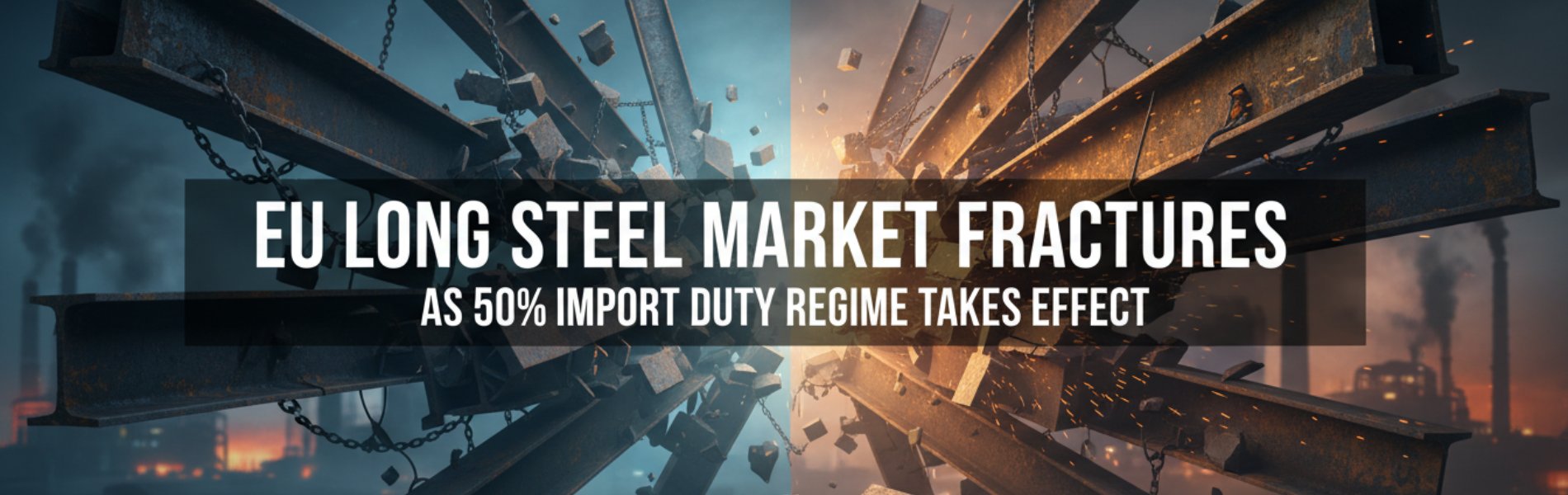
EU Long Steel Market Fractures as 50% Import Duty Regime Takes Effect
The global metallurgical landscape has entered a period of unprecedented volatility following the implementation of the new European Union trade defense measures. In a move that has sent shockwaves through the supply chain, the immediate application of a 50% import duty on non-EU originating long steel products has effectively fractured the continental market. For industry stakeholders, including SaudiSteelWork, understanding the ramifications of this protectionist pivot is essential for navigating the shifting tides of global steel trade.
The Anatomy of the Policy Shock
The European Commission’s decision to levy a blanket 50% tariff on imports disrupts decades of established trade flows. Historically, the EU has relied on a mix of domestic production and strategic imports from Turkey, North Africa, and Asia to satisfy its demand for rebar, wire rod, and merchant bars. The rationale cited involves shielding the bloc’s transition toward green steel and preventing carbon leakage, yet the abruptness of the duty has left stockholders and construction firms scrambling.
This regime creates a distinct bifurcation in the market. On one side, domestic EU mills are now insulated from external price competition, allowing for an immediate hike in ex-works offers. On the other side, international exporters are left with stranded cargo and a desperate need to redirect volume, potentially depressing prices in non-EU markets such as the MENA region and Southeast Asia.
Impact on Pricing and Availability
Skyrocketing Domestic Prices
Almost overnight, the cost of construction steel within the Eurozone has surged. With the removal of competitive import alternatives, European mills have regained pricing power. Market reports indicate that rebar prices in Northern Europe have jumped significantly, driven not only by the tariff protection but also by the need to cover high energy costs and decarbonization investments. For European infrastructure projects, this translates to ballooning budgets and potential delays as procurement teams hesitate to lock in orders at these historic highs.
Supply Chain Bottlenecks
The supply chain for long steel is currently experiencing severe friction. Importers who previously relied on quotas are now facing duties that render their goods commercially unviable. This has led to a buildup of material at major ports like Antwerp and Rotterdam, where customs clearance has become a battleground over origin certification. SaudiSteelWork analysts warn that this bottleneck will likely result in a short-term shortage of specific grades of wire rod required for the automotive and manufacturing sectors, which cannot easily switch suppliers due to homologation requirements.
Global Trade Flow Redirection
As the European door slams shut, the volume of steel originally destined for the EU must find a new home. This phenomenon is expected to increase competition in open markets. Exporters from Asia and the Middle East are aggressively targeting alternative destinations. This redistribution of steel tonnage may lead to a temporary oversupply in regions with lower trade barriers, putting downward pressure on global scrap prices and finished goods indices outside of Europe.
For players like SaudiSteelWork, this shift presents both a challenge and an opportunity. While global price volatility is a risk, the isolation of the EU market reinforces the importance of regional self-sufficiency and the strength of the Saudi Arabian steel industry. The Kingdom’s strategic investment in industrial capacity ensures a stable supply of high-quality steel for local mega-projects, insulated from the regulatory turbulence currently gripping Brussels.
The Construction Sector Fallout
The primary casualty of this trade fracture is the European construction sector. Operating on thin margins, contractors are ill-equipped to absorb a 50% cost increase on raw materials. Industry associations across France, Germany, and Italy have already petitioned for exemptions, citing the risk of mass insolvency among small to mid-sized construction firms. Until the dust settles, we anticipate a slowdown in new housing starts and a pause on non-critical public works across the continent.
Strategic Outlook: Isolation vs. Integration
The 50% import duty regime marks a decisive step away from globalization toward regionalization. While intended to support the EU’s Green Deal and domestic industrial base, the immediate result is market inefficiency and inflation. The fracture in the EU long steel market serves as a stark reminder of how political policy can override market fundamentals.
Moving forward, steel buyers must prioritize supply security over spot-market bargains. The era of frictionless trade is pausing, replaced by a landscape defined by trade barriers, carbon taxes, and geopolitical alliances. SaudiSteelWork remains committed to monitoring these developments, ensuring that our partners and clients are equipped with the intelligence required to adapt to this new reality.