









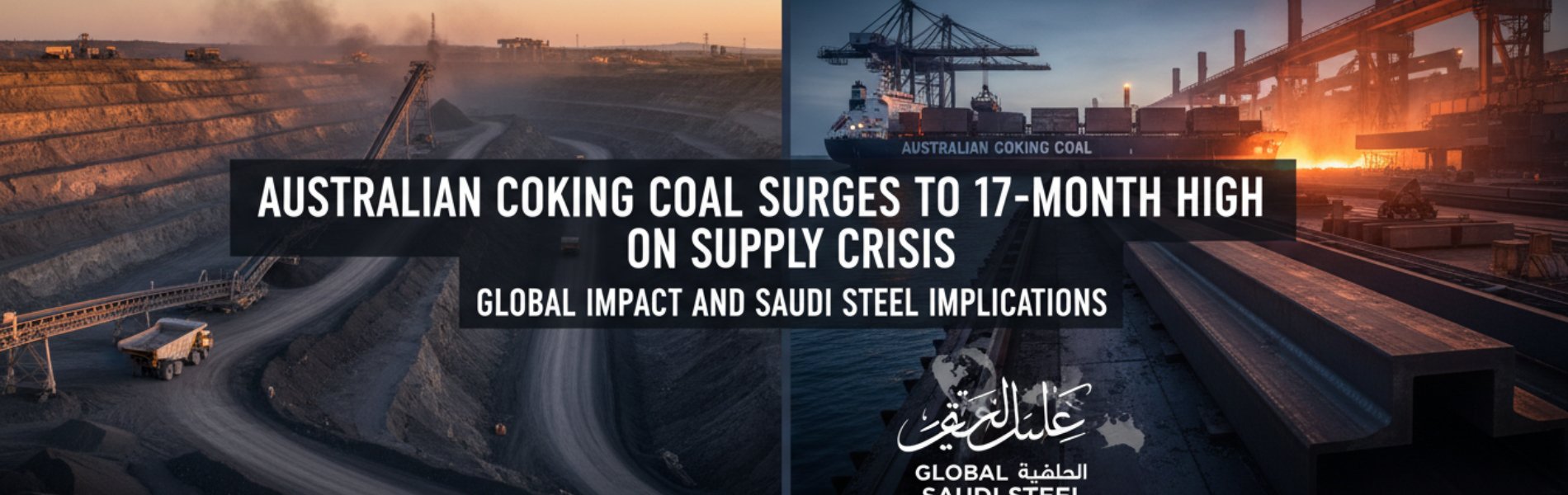
Australian Coking Coal Surges to 17-Month High on Supply Crisis
The global commodities market is witnessing a significant upheaval as Australian coking coal prices have surged to a 17-month high. This dramatic escalation is driven by a severe supply crisis in Queensland, the heartland of the world’s seaborne metallurgical coal trade. For the steel manufacturing sector, particularly for key players in the Saudi steel industry, this volatility presents both operational challenges and strategic considerations regarding raw material procurement. As the benchmark price for Premium Hard Coking Coal (PHCC) breaks through critical resistance levels, the ripple effects are being felt from the ports of Hay Point to the industrial zones of Jubail and Riyadh.
The Queensland Bottleneck: Anatomy of a Supply Crisis
The primary catalyst for this price rally lies in the logistical constraints and weather-related disruptions plaguing Queensland’s coal mines. Australia accounts for more than half of the global seaborne supply of coking coal, making the market hypersensitive to any disruptions in this region. Recent heavy rainfall, combined with extended maintenance on critical rail networks, has severely hampered the ability of miners to transport raw materials to port terminals.
Reports indicate that the queue of vessels waiting at major terminals like Dalrymple Bay Coal Terminal has grown extensively, signaling a tightening of immediate availability. When supply chain bottlenecks occur in Australia, the scarcity premium is almost instantly priced into the global market. Unlike thermal coal, which has a more diversified supply base, high-quality metallurgical coal is geologically scarce, granting Australian exporters significant pricing power during supply crunches.
Global Market Dynamics: The Scramble for Cargoes
The surge to a 17-month high—pushing prices well above the $300/tonne mark—is not solely a supply-side story. It is compounded by robust demand from major Asian importers. Steelmakers in India and Southeast Asia are aggressively bidding for prompt cargoes to secure their inventories ahead of potential further disruptions. This panic buying has created a bullish feedback loop, driving FOB Australia prices upward.
Furthermore, the interplay with the Chinese market remains complex. While China has domestic production, safety inspections and mine closures have limited their local output, forcing them to rely on seaborne imports. The collective demand from these giant steel-producing nations puts immense pressure on available coking coal stocks, leaving smaller buyers with fewer options and higher bills.
Impact on Blast Furnace Economics
For integrated steel mills utilizing blast furnaces, coking coal is an indispensable feedstock used to produce metallurgical coke. This coke acts as both a fuel and a reducing agent in the smelting of iron ore. When the cost of this key input rises, the marginal cost of steel production increases proportionately. Steel producers are faced with a difficult choice: absorb the higher costs and accept compressed margins, or pass the cost on to consumers in the form of higher prices for finished steel products like rebar, coils, and structural sections.
Implications for the Saudi Steel Industry
While the Saudi steel sector relies heavily on Direct Reduced Iron (DRI) technology which utilizes natural gas, the global nature of steel pricing means the Kingdom is not immune to these shocks. The price of scrap metal and intermediate goods often tracks with the broader raw material complex. Furthermore, for Saudi entities involved in traditional blast furnace operations or those importing specific grades of coke/coal for various metallurgical processes, the Australian crisis is a direct hit to the bottom line.
SaudiSteelWork observes that as global steel prices potentially rise to offset raw material inflation, the cost of infrastructure projects within the Kingdom could see upward pressure. With massive giga-projects under Vision 2030 demanding immense quantities of steel, global raw material inflation is a critical monitoring point for procurement managers and construction firms alike.
Strategic Procurement in a Volatile Market
In response to this 17-month high, procurement strategies must evolve. Reliance on spot market purchases exposes steel manufacturers to extreme volatility. Moving forward, we anticipate a shift toward:
- Diversification of Origin: Exploring coking coal supplies from North America or Mozambique to reduce reliance on Australian logistics.
- Long-term Indexation: Moving away from fixed-price contracts that are difficult to secure, toward index-linked contracts that offer average pricing over time.
- Efficiency Optimization: Steel mills may look to optimize their fuel mix, utilizing Pulverized Coal Injection (PCI) or blending lower-grade coals to mitigate the consumption of expensive Premium Hard Coking Coal.
Future Outlook: Will Prices Stabilize?
Analysts are divided on the longevity of this rally. While the supply crisis in Australia is acute, weather patterns are transient. Once the rains subside and rail maintenance concludes, export volumes should normalize, potentially cooling the market. However, with limited new investment in coal mining capacity globally due to ESG pressures, the structural tightness in the market may persist.
For now, the market remains in a state of high alert. The surge in Australian coking coal serves as a stark reminder of the fragility of global industrial supply chains. For stakeholders in the steel industry, from mining giants to end-users like SaudiSteelWork, agility and foresight in raw material planning have never been more critical.